Spiral Wound vs. Kammprofile Gaskets: Which Is Better for Your Application?
When sealing critical piping systems, heat exchangers, pressure vessels, and process equipment, selecting the right gasket can significantly impact reliability, maintenance costs, and equipment uptime.
Two of the most common high-performance sealing solutions used in industrial applications are spiral wound gaskets and Kammprofile gaskets. Both are designed for demanding operating conditions, but each offers distinct advantages depending on your application’s pressure, temperature, maintenance requirements, and flange conditions.
In this guide, we’ll compare spiral wound and Kammprofile gaskets, explain where each excels, and help you determine which solution is best for your operation.
What Is a Spiral Wound Gasket?
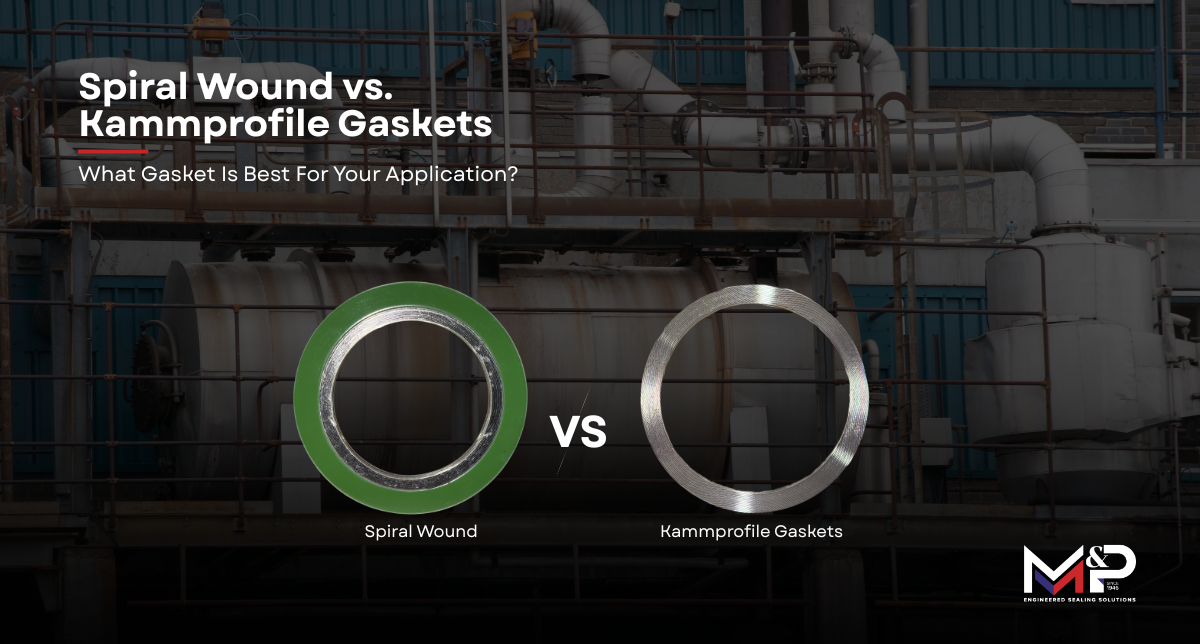
A spiral wound gasket consists of alternating layers of metal winding and soft sealing material that are spirally wound together. The metal provides strength and resilience while the filler material creates the seal.
Common filler materials include:
- Graphite
- PTFE
- Ceramic fiber
Spiral wound gaskets are widely used throughout the refining, petrochemical, power generation, and process industries because they perform well under elevated temperatures and pressures.
Advantages of Spiral Wound Gaskets
- Excellent performance in high-temperature applications
- Handles thermal cycling effectively
- Suitable for high-pressure service
- Available in a wide range of materials
- Cost-effective for many industrial applications
Limitations of Spiral Wound Gaskets
- Can be damaged during installation
- More susceptible to over-compression
- Less effective on damaged flange surfaces
- Often replaced during maintenance rather than reused
Common Applications
- Pipe flanges
- Refineries
- Chemical plants
- Steam systems
- Power generation facilities
What Is a Kammprofile Gasket?
A Kammprofile gasket features a solid metal core with concentric serrations machined into both sealing surfaces. A thin layer of soft sealing material is applied to each face to create the seal. This design combines the strength of a metal gasket with the sealing performance of softer materials. Because of their ability to achieve tight seals at lower seating stresses, Kammprofile gaskets have become increasingly popular in critical service applications.
Advantages of Kammprofile Gaskets
- Exceptional sealing performance
- Reduced emissions and leakage potential
- More resistant to blowout
- Better performance on imperfect flange surfaces
- Can often be reused if properly inspected
- Excellent for heat exchanger applications
Limitations of Kammprofile Gaskets
- Higher initial cost
- More precise manufacturing requirements
- Not always necessary for lower-demand applications
Common Applications
- Heat exchangers
- Pressure vessels
- Refining equipment
- Petrochemical processing
- Emissions-sensitive applications
| Feature | Spiral Wound | Kammprofile |
|---|---|---|
| High Temperature Performance | Excellent | Excellent |
| High Pressure Capability | Excellent | Excellent |
| Emissions Control | Very Good | Excellent |
| Blowout Resistance | Very Good | Excellent |
| Reusability | Limited | Better |
| Flange Surface Tolerance | Good | Excellent |
| Heat Exchanger Service | Good | Excellent |
| Installation Sensitivity | Moderate | Lower |
| Initial Cost | Lower | Higher |
| Lifecycle Cost | Moderate | Often Lower |
Which Gasket Provides Better Sealing Performance?
When comparing sealing performance alone, Kammprofile gaskets often have the advantage.The serrated metal core creates concentrated sealing stresses that improve gasket seating and leak resistance. This makes Kammprofile gaskets particularly effective in applications where emissions reduction and long-term reliability are critical. Facilities focused on fugitive emissions reduction frequently select Kammprofile gaskets because they provide more consistent sealing performance over extended operating periods. For applications where leakage prevention is the highest priority, Kammprofile is often considered the superior choice.
Which Gasket Is Better for Heat Exchangers?
Heat exchanger applications are one area where Kammprofile gaskets frequently outperform spiral wound designs. Heat exchanger flanges often have lower available bolt loads and larger sealing surfaces that require uniform gasket stress. Kammprofile gaskets provide excellent recovery and sealing performance under these conditions while reducing the risk of leakage during thermal cycling. This is one reason many facilities upgrading older heat exchangers transition from spiral wound gaskets to Kammprofile designs.
Which Option Costs Less?
At first glance, spiral wound gaskets are typically less expensive. However, the true cost of a gasket should include:
- Installation labor
- Maintenance intervals
- Downtime costs
- Leakage events
- Replacement frequency
In many applications, Kammprofile gaskets can reduce overall lifecycle costs by providing longer service life and improved sealing reliability. For non-critical applications, spiral wound gaskets often remain the most economical choice. For critical equipment where downtime is expensive, Kammprofile frequently delivers greater long-term value.
When Should You Choose a Spiral Wound Gasket?
Spiral wound gaskets are often the preferred solution when:
- Budget is a primary concern
- Flange conditions are good
- Standard ASME piping systems are being sealed
- High temperatures and pressures are present
- Frequent maintenance access is available
When Should You Choose a Kammprofile Gasket?
Kammprofile gaskets are often the preferred solution when:
- Leakage prevention is critical
- Fugitive emissions must be minimized
- Heat exchanger reliability is important
- Flange conditions are less than ideal
- Maintenance shutdowns are costly
- Long-term performance is prioritized
Frequently Asked Questions
Are Kammprofile gaskets better than spiral wound gaskets?
Not necessarily. Both are excellent sealing solutions. Kammprofile gaskets often provide superior sealing performance and emissions control, while spiral wound gaskets may offer a lower initial cost.
Can Kammprofile gaskets replace spiral wound gaskets?
In many applications, yes. However, operating conditions, flange design, and equipment requirements should always be reviewed before making a replacement.
Which gasket lasts longer?
Service life depends on operating conditions, but Kammprofile gaskets often provide longer life in demanding applications due to their robust metal core design and sealing efficiency.
Which gasket is best for heat exchangers?
Many engineers prefer Kammprofile gaskets for heat exchangers because of their excellent sealing performance and ability to maintain gasket stress over time.
Need Help Choosing the Right Gasket?
Selecting between spiral wound and Kammprofile gaskets requires more than simply comparing specifications. Temperature, pressure, flange condition, bolt load, maintenance requirements, and emissions goals all play an important role in determining the best solution.
At M&P Sealing, we help customers evaluate their operating conditions and select the gasket technology that delivers the highest reliability and lowest total cost of ownership. Whether you need spiral wound, Kammprofile, metal, PTFE, graphite, or custom gasket solutions, our team can help you find the right fit for your application.
Contact M&P Sealing today to discuss your sealing requirements and receive expert gasket recommendations.