GYLON® Gasket Materials: Understanding the Different Grades and Their Applications
Selecting the right gasket material is essential for maintaining reliable seals, preventing leaks, and protecting industrial equipment. In applications involving aggressive chemicals, fluctuating temperatures, and demanding operating conditions, standard gasket materials may not provide the sealing performance required.
GYLON® gasket materials are engineered to address these challenges, offering excellent chemical resistance, improved dimensional stability, and dependable sealing performance across a wide range of industrial applications. But not all GYLON® gasket grades are the same.Understanding the differences between GYLON® grades can help maintenance professionals, engineers, and purchasing teams select the appropriate sealing material for their specific operating conditions.
What Is GYLON® Gasket Material?
GYLON® is a family of high-performance polytetrafluoroethylene (PTFE) gasket materials developed by Garlock for demanding industrial sealing applications.While conventional PTFE is valued for its exceptional chemical resistance, it can experience creep relaxation and cold flow when subjected to sustained compressive loads. These characteristics can reduce gasket stress over time and potentially compromise sealing performance. GYLON® materials use specialized manufacturing processes and selected fillers to improve upon these characteristics while retaining the chemical resistance associated with PTFE.
Key benefits of GYLON® gasket materials include:
- Excellent chemical resistance: Suitable for a wide range of aggressive chemicals, solvents, acids, and caustic solutions, depending on the grade.
- Reduced creep relaxation: Helps maintain gasket stress and sealing integrity over time.
- Temperature resistance: Selected grades are suitable for demanding high- and low-temperature applications.
- Improved sealing performance: Helps reduce leakage, product loss, and fugitive emissions.
- Material versatility: Available in multiple grades designed for different chemical environments and flange conditions.
These properties make GYLON® a popular sealing solution in chemical processing, petrochemical facilities, power generation, pharmaceutical manufacturing, and other industrial operations.
Understanding the Different GYLON Gasket Grades
GYLON® materials are available in several grades, each formulated for particular sealing requirements. Choosing the correct grade depends on factors such as chemical compatibility, operating temperature, pressure, flange design, and available bolt load.
GYLON® Style 3500 – Fawn PTFE with Silica Filler
GYLON® Style 3500 is a silica-filled PTFE gasket material designed for applications involving aggressive chemical environments.
Its formulation provides excellent resistance to many strong acids, solvents, hydrocarbons, and other challenging process media.
Common applications include:
-
Chemical processing equipment
-
Acid handling systems
-
Petrochemical processing
-
Industrial piping and flanged connections
-
Equipment handling aggressive solvents
GYLON® 3500 is often considered when chemical resistance and long-term sealing reliability are critical.
However, chemical compatibility must be evaluated for the specific process media. For example, Style 3500 is not generally recommended for hydrofluoric acid service.
GYLON® Style 3504 – Blue PTFE with Aluminosilicate Microspheres
GYLON® Style 3504 is a blue PTFE gasket material containing aluminosilicate microspheres.
This grade is designed for applications involving moderate concentrations of acids and certain caustics, as well as hydrocarbons, solvents, refrigerants, and other industrial fluids.
Common applications include:
-
Refrigeration and cooling systems
-
Chemical processing equipment
-
Industrial piping systems
-
Hydrocarbon handling
-
Selected utility and process fluid applications
GYLON® 3504 provides a combination of chemical resistance and sealing performance, making it a versatile option for a variety of industrial applications.
Its suitability for specific refrigerants, coolants, or chemical mixtures should always be verified against operating conditions and manufacturer recommendations.
GYLON® Style 3510 – Off-White PTFE with Barium Sulfate Filler
GYLON® Style 3510 is a barium sulfate-filled PTFE gasket material developed for applications requiring excellent chemical resistance and tight sealing performance.
This grade is particularly well suited for many strong caustic environments and applications involving hazardous or toxic chemicals.
Common applications include:
-
Strong caustic processing
-
Chemical manufacturing
-
Industrial chemical transfer systems
-
Process equipment handling hazardous media
-
Applications requiring stringent leakage control
GYLON® 3510 is often selected when aggressive chemical exposure and leakage prevention are major considerations.
GYLON® Style 3545 – Microcellular PTFE for Low Bolt Load Applications
Not every industrial flange can generate the compressive force required by conventional gasket materials.
GYLON® Style 3545 is a microcellular PTFE gasket material designed for applications where available bolt load is limited.
Its construction allows the gasket to conform to flange surfaces under relatively low compressive stress.
Common applications include:
-
Low bolt load flange connections
-
Glass-lined equipment
-
FRP and other nonmetallic flange systems
-
Applications with limited flange loading capacity
GYLON® 3545 can be an effective solution when maintaining a reliable seal without excessive flange stress is a priority.
Although these materials share the benefits of PTFE-based sealing technology, their formulations and performance characteristics differ. The correct gasket grade should always be selected based on the actual application rather than material composition alone.
Where Are GYLON® Gaskets Used?
GYLON® gasket materials are used across industries where chemical compatibility, leak prevention, and reliable sealing performance are essential.
Chemical Processing and Petrochemical Facilities
Chemical processing operations frequently involve aggressive media that can degrade conventional gasket materials. GYLON® grades provide chemical-resistant sealing options for piping systems, valves, pumps, and processing equipment where maintaining gasket integrity is critical.
Oil and Gas Applications
Refineries and petrochemical operations rely on dependable sealing solutions for equipment exposed to hydrocarbons, solvents, and other process fluids. Properly selected GYLON® gaskets can help maintain reliable flange connections and reduce the risk of leaks.
Industrial Cooling and Refrigeration Systems
Cooling systems may involve refrigerants, treated water, glycol-based solutions, and other process fluids that require careful gasket material selection. Certain GYLON® grades, including Style 3504, may be suitable for these applications when chemical compatibility and operating conditions are verified.
Pharmaceutical and Food Processing
Certain GYLON® gasket grades are used in processing environments where chemical resistance and applicable material compliance requirements are important. When selecting materials for these industries, specific regulatory requirements, product-contact conditions, and manufacturer certifications must be reviewed.
How to Choose the Right GYLON® Gasket Material
Selecting the appropriate GYLON® grade requires evaluating more than chemical resistance alone. Several factors influence gasket performance:
1. Chemical Compatibility
Identify the exact process media, including chemical concentrations, mixtures, and cleaning agents. Different GYLON® grades offer different resistance characteristics.
2. Operating Temperature
Consider both normal operating temperatures and potential temperature fluctuations. Temperature can influence gasket performance and material suitability.
3. System Pressure
Review the operating pressure, potential pressure spikes, and flange design. Pressure capability must be evaluated together with temperature and other operating conditions.
4. Flange Type and Available Bolt Load
Flange material, surface condition, and available gasket compression affect sealing performance. Low bolt load applications may require specialized materials such as GYLON® 3545.
5. Gasket Dimensions and Configuration
Proper gasket dimensions are essential for achieving the intended seal. Inner diameter, outer diameter, thickness, bolt holes, and flange configuration should all be considered.
Working with an experienced industrial gasket supplier can help ensure that the selected material and gasket configuration meet the application’s requirements.
Custom GYLON® Gaskets from M&P Sealing
At M&P Sealing, we understand that industrial sealing requirements are rarely one-size-fits-all. Whether you’re replacing an existing gasket, specifying material for new equipment, or sourcing custom-cut gaskets for an industrial application, selecting the correct material is an important part of achieving reliable sealing performance. Our gasket manufacturing capabilities allow us to produce custom gasket configurations based on customer specifications, drawings, and application requirements. From standard flange gaskets to complex shapes and specialty sealing requirements, M&P Sealing works with customers to identify practical sealing solutions for demanding industrial environments.
Need a GYLON® gasket for your application?
Contact M&P Sealing to discuss material requirements, gasket dimensions, and custom manufacturing options. Our team can assist with your gasket inquiry and help determine the next steps for your sealing application.
Frequently Asked Questions About GYLON® Gaskets
What is the difference between GYLON® and standard PTFE gasket material?
GYLON® is an engineered PTFE-based gasket material developed to reduce creep relaxation and cold flow commonly associated with conventional PTFE. Its specialized formulations can provide improved sealing performance under demanding operating conditions.
What is the difference between GYLON® 3500 and 3510?
GYLON® 3500 contains silica filler and is commonly used in aggressive acid and solvent applications. GYLON® 3510 contains barium sulfate filler and is particularly suited to many strong caustic environments. The best choice depends on chemical compatibility and operating conditions.
What is blue GYLON® gasket material?
Blue GYLON® typically refers to Style 3504, a PTFE gasket material containing aluminosilicate microspheres. It is used in applications involving moderate acids, selected caustics, refrigerants, hydrocarbons, and other compatible industrial fluids.
Can GYLON® gaskets be custom cut?
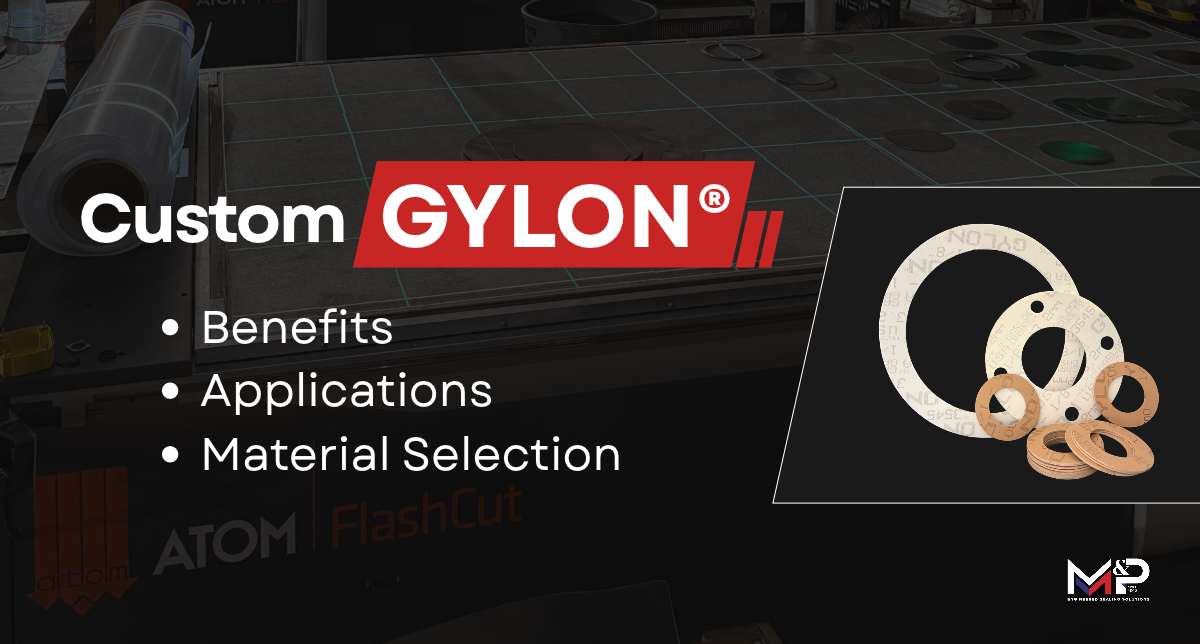
Yes. GYLON® sheet materials can be fabricated into custom gasket shapes and dimensions using appropriate gasket manufacturing equipment. Custom configurations may include ring gaskets, full-face gaskets, and other application-specific designs.
What temperature can GYLON® gaskets withstand?
Temperature ratings vary by grade and application. For example, Garlock lists a maximum continuous temperature of 500°F (260°C) for several common GYLON® styles, including 3500, 3504, and 3510. Actual suitability depends on the combined temperature, pressure, chemical exposure, and flange conditions.
How do I know which GYLON® grade I need?
The correct grade depends on the chemical media, operating temperature, pressure, flange type, available bolt load, and gasket dimensions. Providing these details when requesting a quote helps determine the most appropriate material for your application.