
In industrial sealing, gasket material selection often gets the spotlight. But even the best gasket will fail if it is not installed correctly.
Improper torque, uneven bolt load, or misunderstood gasket stress requirements are among the most common causes of leakage, blowouts, and premature failure in flange systems.
Understanding the relationship between gasket stress and bolt torque is critical to long-term sealing reliability.
What Is Gasket Stress?
Gasket stress refers to the compressive force applied to a gasket during installation. This stress must be high enough to:
- Seat the gasket into flange surface imperfections
- Create an initial seal
- Maintain load under operating pressure and temperature
However, it must not exceed the material’s compressive limits.
Every gasket material has a minimum seating stress and a maximum allowable compressive stress. Operating outside that window leads to problems.
How Bolt Torque Translates to Gasket Load
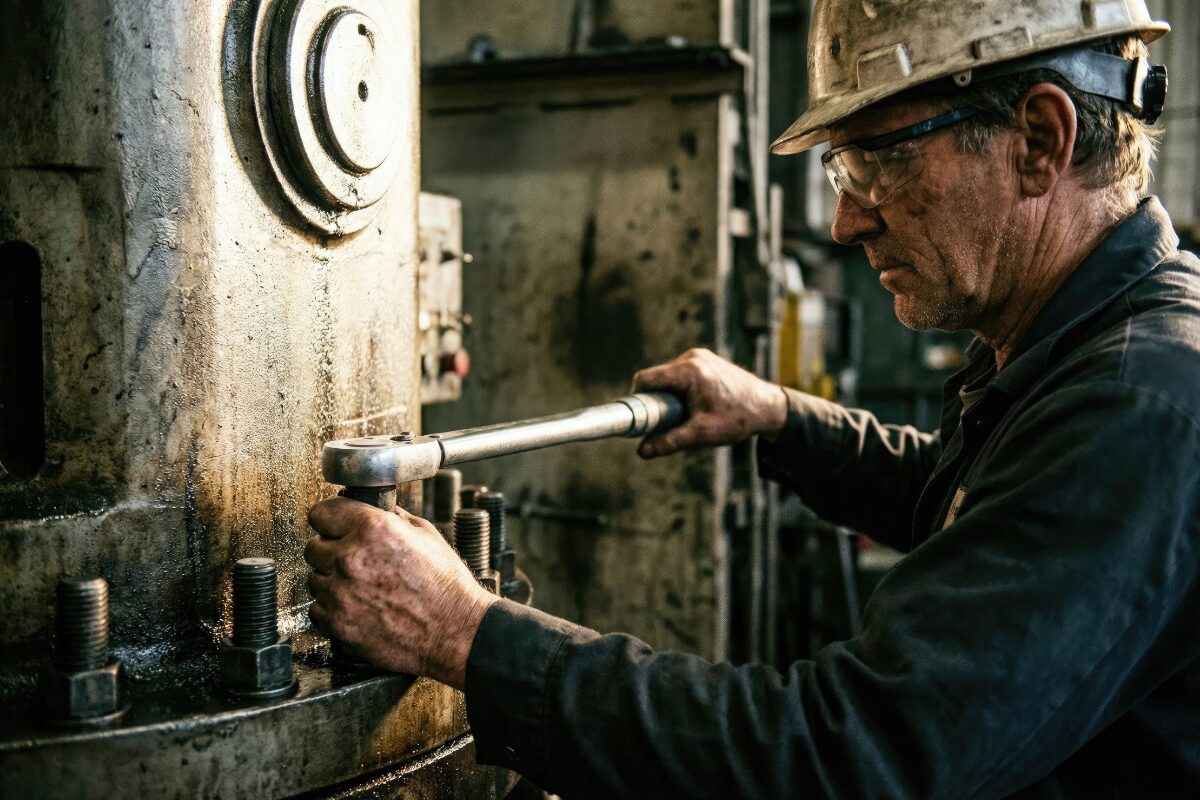
Torque applied to flange bolts generates bolt tension. That bolt tension creates compressive force across the gasket.
However, torque is only an indirect way to control gasket stress.
Several variables influence the final load:
- Bolt lubrication condition
- Thread friction
- Nut factor (K-factor)
- Flange surface finish
- Bolt pattern tightening sequence
- Number and diameter of bolts
Two assemblies torqued to the same value can produce very different gasket stresses.
This is why torque charts are guidelines, not guarantees.
Why Under-Torquing Causes Leakage
If bolt load is too low:
- The gasket does not properly seat
- Flange surface irregularities are not filled
- Internal pressure can overcome sealing force
- Micro-leak paths develop
Over time, relaxation and thermal cycling can further reduce bolt load, worsening the issue.
Why Over-Torquing Causes Damage
Excess torque can:
- Crush soft gasket materials
- Cause creep or extrusion
- Damage flange faces
- Reduce long-term load retention
Materials such as PTFE-based gaskets are especially sensitive to over-compression due to creep behavior.
Proper stress control is not just about preventing leaks, it protects both the gasket and the flange assembly.
The Role of Thermal Cycling and Relaxation
Industrial systems rarely operate at constant temperature.
As temperature increases:
- Bolts expand
- Flanges expand
- Gasket materials compress and relax
Certain materials (especially PTFE and some elastomers) exhibit stress relaxation, meaning they lose load over time under compression.
If initial bolt load is not properly calculated, the assembly may fall below minimum sealing stress during operation.
Gasket Stress vs. Operating Pressure
Internal system pressure attempts to separate flanges.
The gasket must maintain sufficient compressive stress to resist this separation force.
This relationship is influenced by:
- ASME B16.5 flange class
- Internal pressure rating
- Gasket width and effective area
- Bolt size and quantity
In higher-pressure applications, precise load calculation becomes increasingly important.
Installation Best Practices
To improve sealing reliability:
- Follow a cross-pattern tightening sequence
- Use calibrated torque tools
- Apply proper bolt lubrication
- Perform multi-pass tightening (incremental loading)
- Consider hot re-torque where applicable
- Verify flange alignment before installation
Material selection and installation work together. Neither alone guarantees performance.
Why Engineering Support Matters
Gasket stress requirements vary significantly depending on material type, including high-performance materials such as DuPont™ Kalrez® perfluoroelastomer materials.
- Compressed fiber
- PTFE
- Expanded PTFE
- Graphite
- Metal-reinforced designs
Each has different seating and operating stress ranges.
Selecting the correct material is only part of the equation. Understanding load requirements ensures the material performs as intended.
At M&P Sealing, we approach sealing performance from both a material and installation perspective because reliability depends on both.